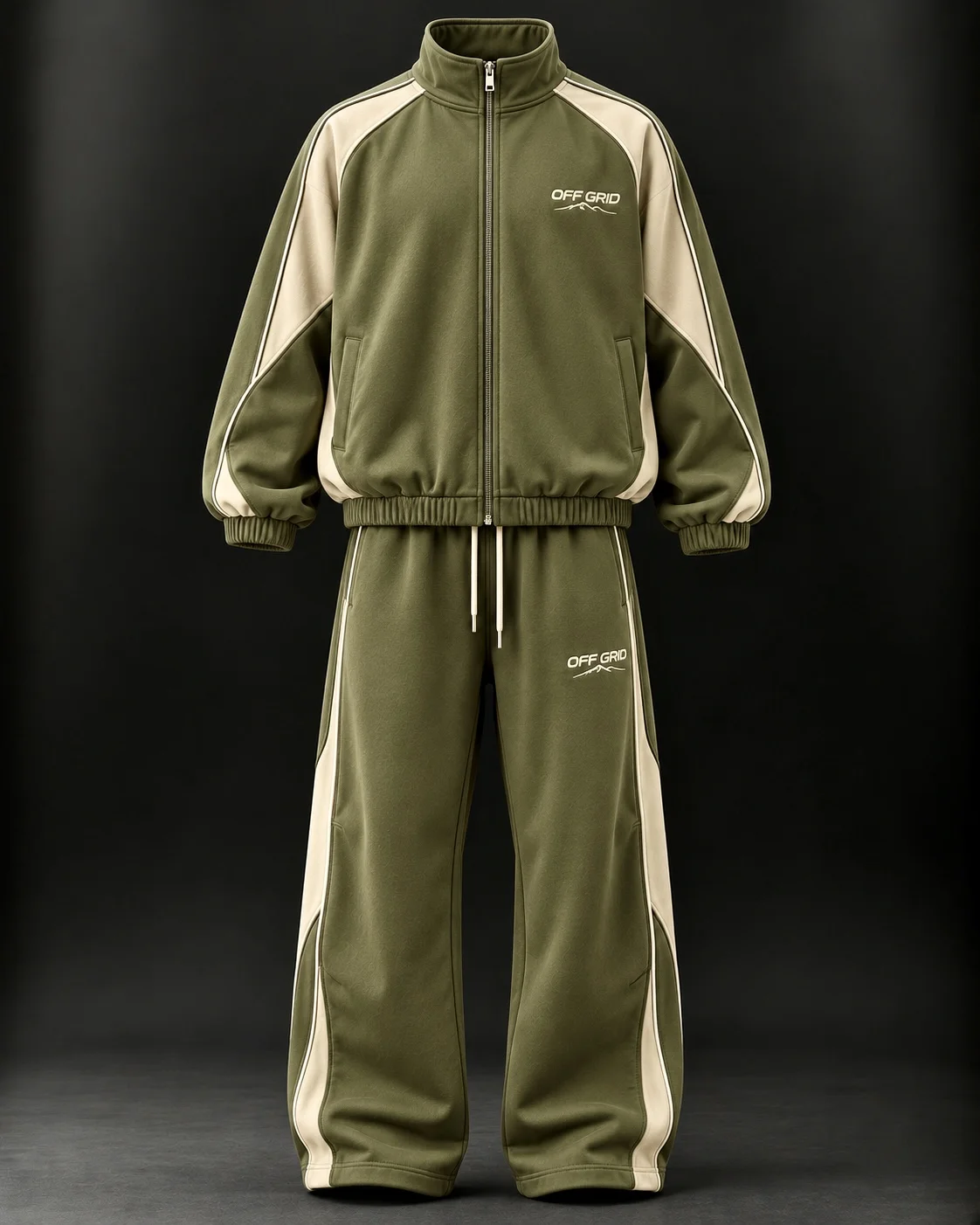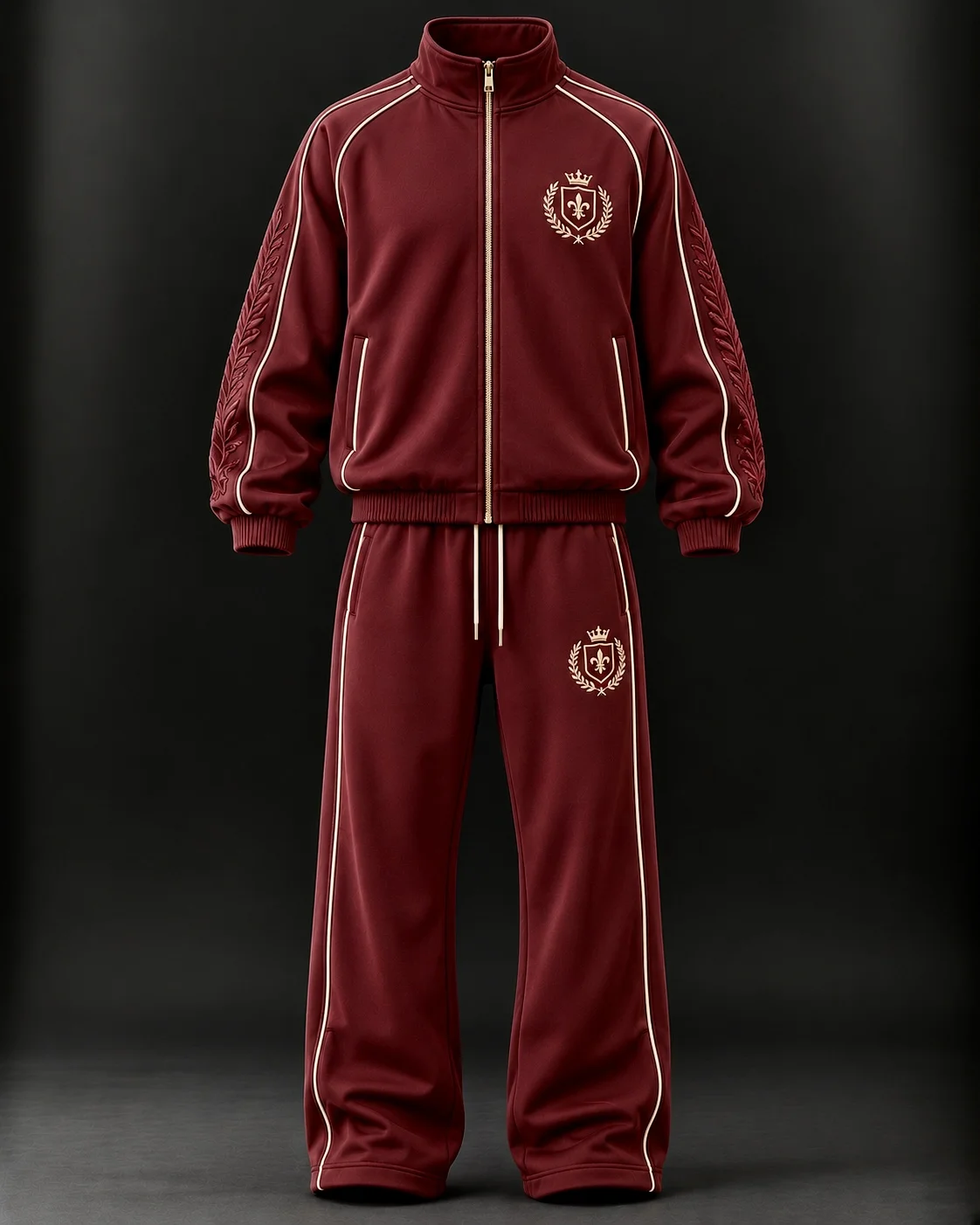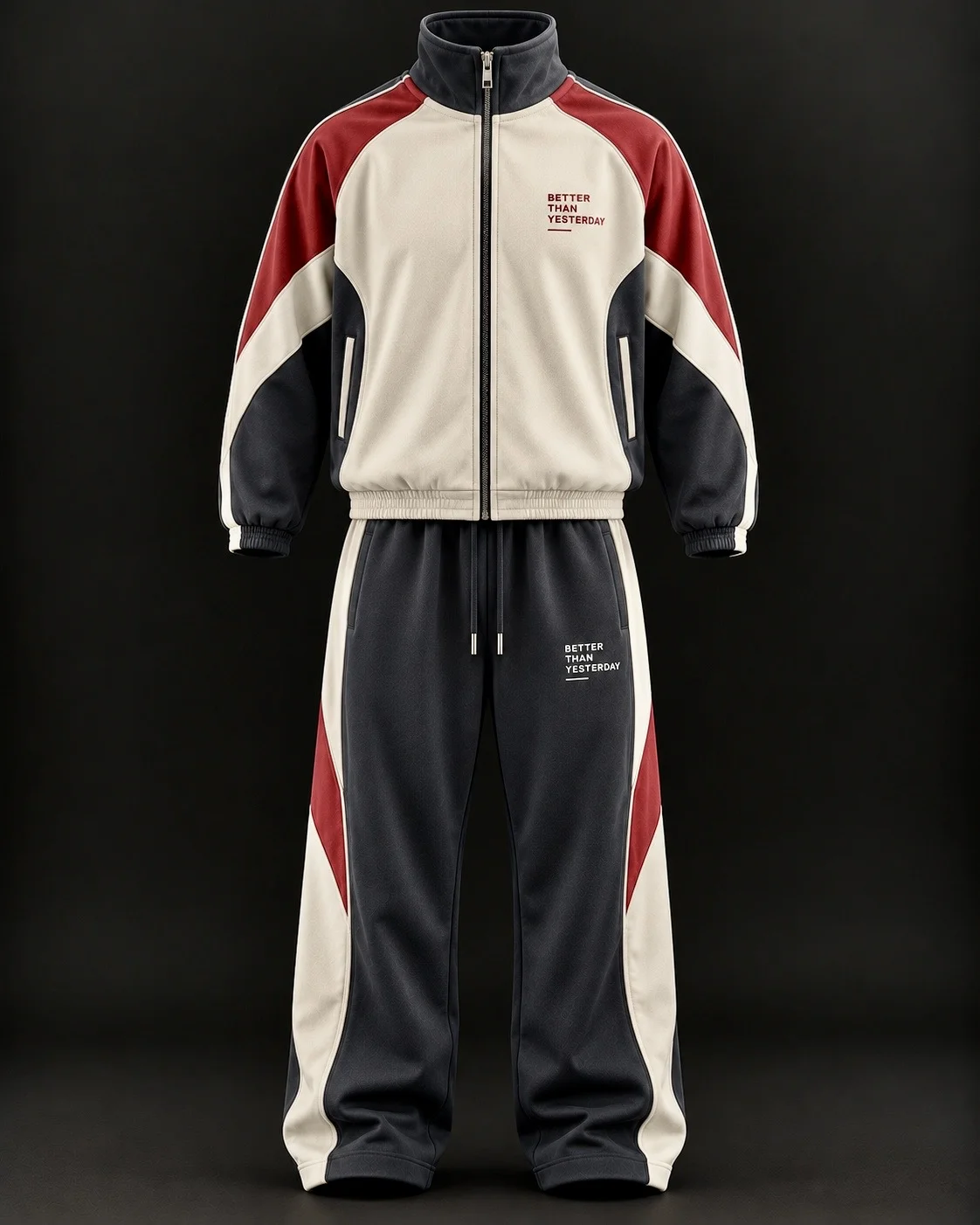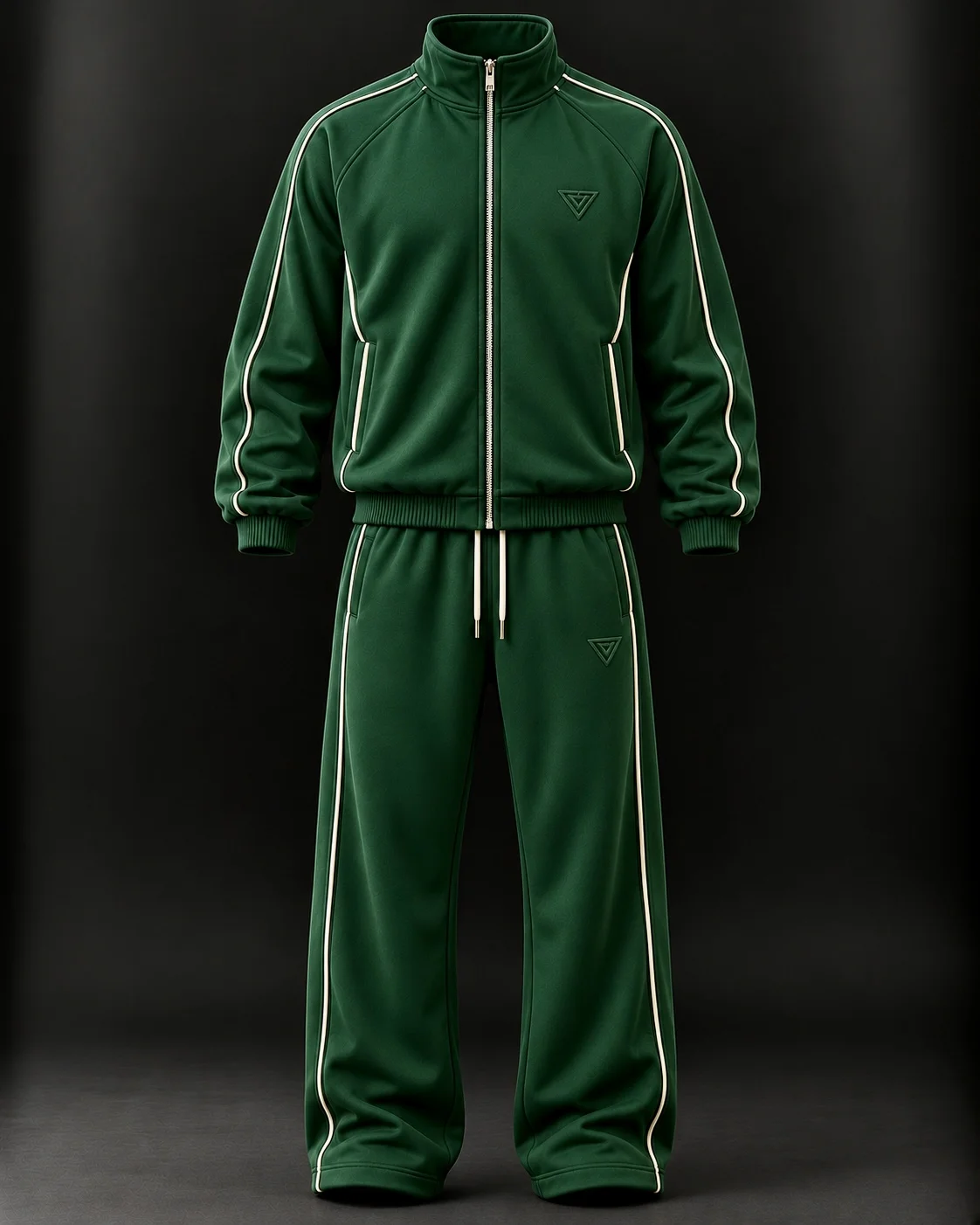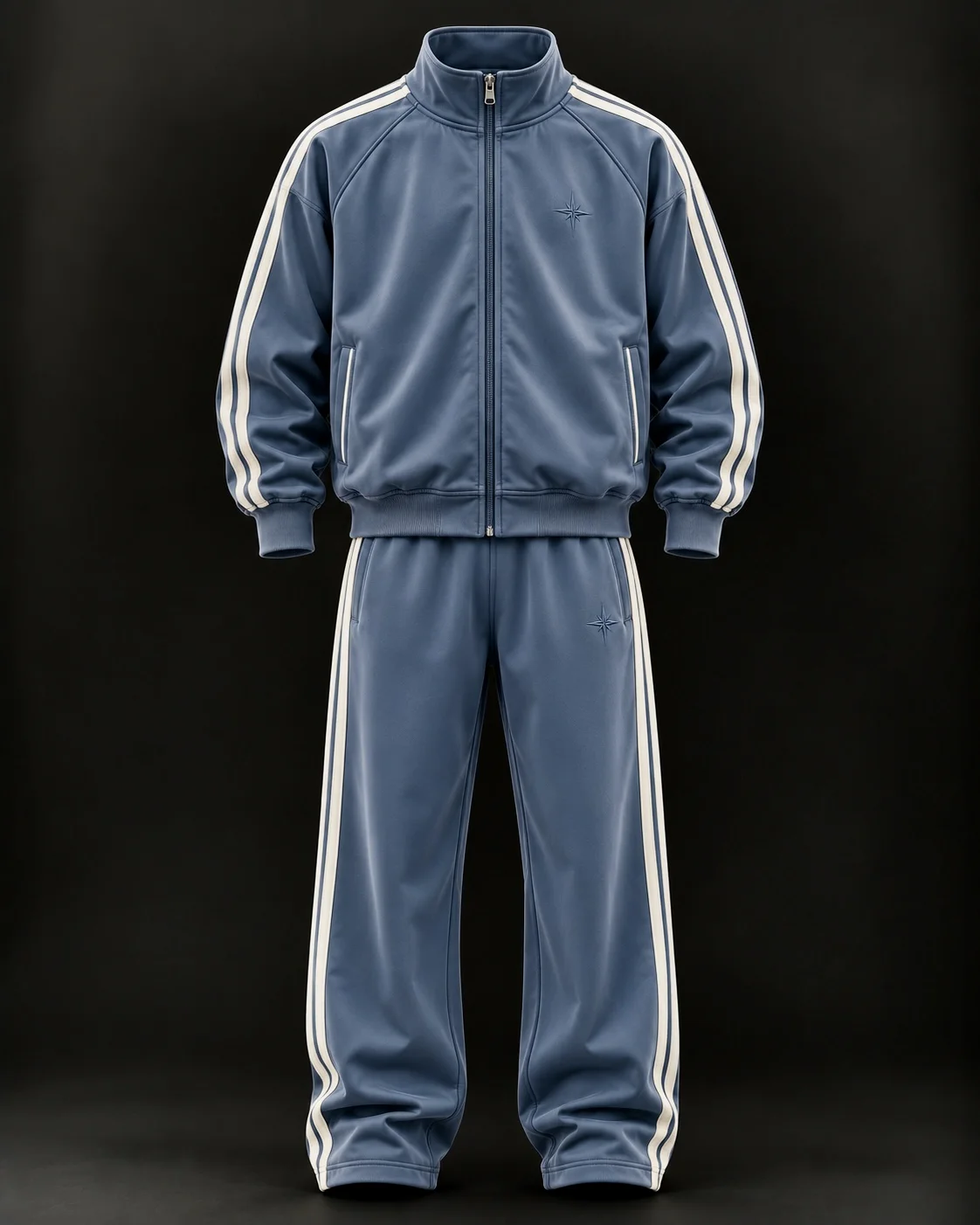
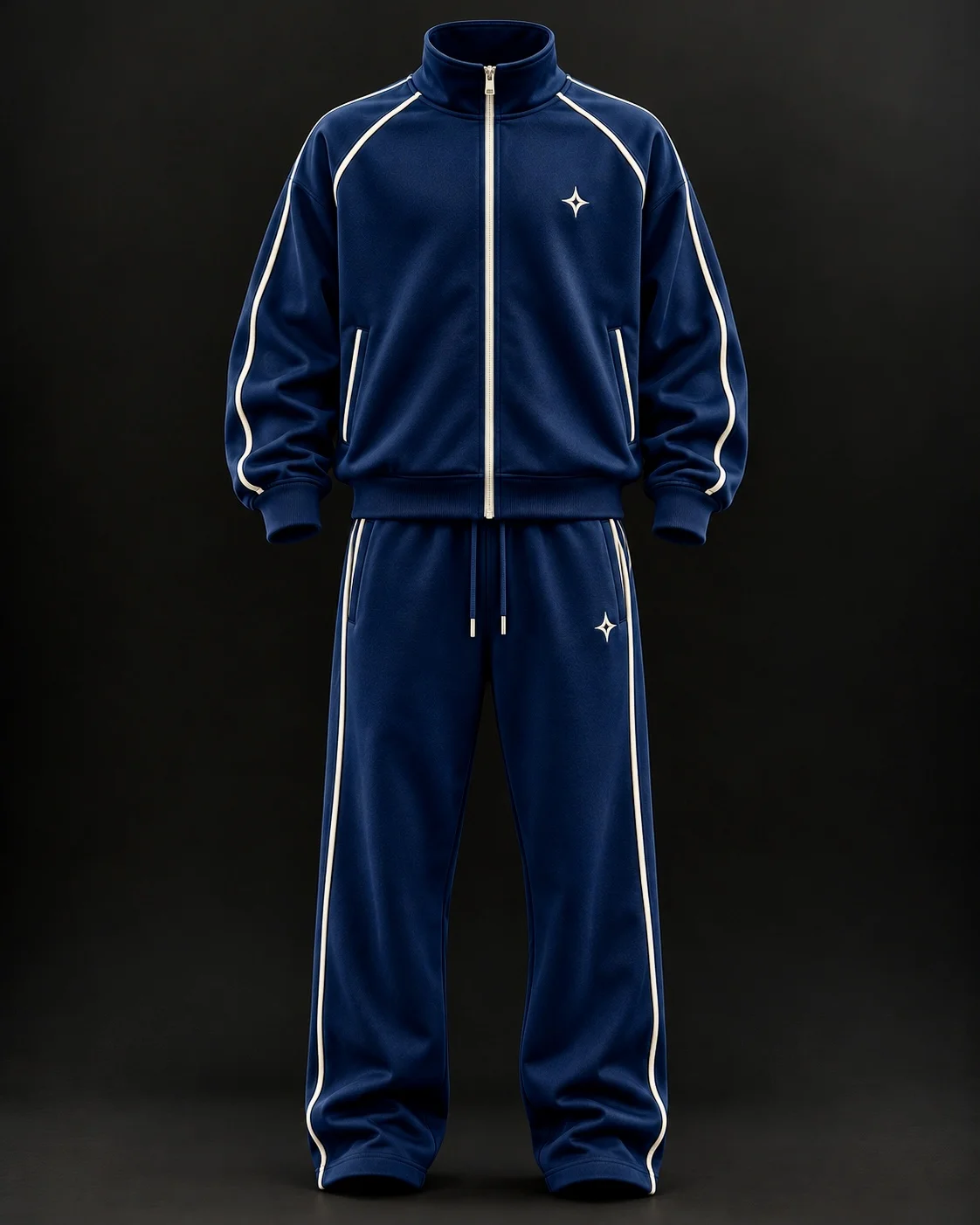
Classic Streetwear Tracksuit
280 GSM · Regular relaxed fit
View Product Details : Classic Streetwear TracksuitPlan coordinated tracksuits with separate jacket and pant charts, matching material references and measured branding positions. Define panels, closures, waistband and leg finish, then review both garments together as a set.
280 GSM · Regular relaxed fit
View Product Details : Classic Streetwear Tracksuit300 GSM · Oversized fit
View Product Details : Oversized Tracksuit Set300 GSM · Regular fit
View Product Details : Embroidered Tracksuit280 GSM · Regular relaxed fit
View Product Details : Color Block Tracksuit300 GSM · Regular fit
View Product Details : Premium Interlock Tracksuit280-300 GSM · Relaxed fit
View Product Details : Relaxed Fit TracksuitA tracksuit needs a jacket chart and a pant chart. Set jacket chest, length, shoulder and sleeve measurements alongside pant waist, rise, inseam and leg shape. Identify whether the set uses one size for both pieces or permits mixed top and bottom sizes. That choice affects the quantity breakdown and packing instructions.
Show front and back views of both garments. Mark pockets, closures, collar shape, cuffs and waistband details, including any matching panels or piping. A drawing of the complete outfit helps explain coordination, while separate construction views prevent a feature on one garment being assumed for the other.
Interlock, fleece and woven materials require different construction discussions. Send a reference for the desired handle and outline, together with proposed composition, weight and finish where known. The fabric name alone does not establish a particular stretch, warmth or functional result.
Compare jacket and pant materials in consistent light, especially where ribs, zippers or contrast panels need to coordinate. If different materials are proposed, discuss how their appearance and care requirements will work together. Keep each swatch and trim identified in the specification so a replacement can be reviewed on both pieces rather than approved in isolation.
Color blocking requires seam locations and individual color references, not just a list of shades. State how panel lines should align across the body, sleeves and legs. Show piping width and attachment where included, then review the resulting line on the sewn sample.
For embroidery, patches or print, supply the artwork dimensions and placement for each component. A logo on the jacket chest and pant thigh may need different scales. Review stitch detail, backing and edge construction on the actual material. Private label manufacturing covers how labels and packing fit into that brief.
Inspect the combined proportions, then check each garment separately while standing, sitting and moving as described in the brief. Jacket length can change the apparent waist position, while pant rise affects how the complete outfit reads. Record fit and construction changes against the appropriate chart.
Keep sample approval specific: note which materials, trims and artwork were present and which components remain open. Confirm the quantity of complete sets or individual pieces and any size pairing rules before requesting production terms. Use custom cut and sew development for original panel constructions and send your tracksuit brief with the destination and required delivery window.
Send the garment styles, fabric preferences and quantities you have in mind. Include your delivery country and any tech pack or reference images.